Blog
What to do after a crash with kids in the car
· Ryan Fields-Spack, former fire captain, 20+ years as a paramedic · Education only. Call 911 in an emergency.
Who picks these kits
If you crash with kids in the car, the first job is to keep from making it worse. Stay calm, make sure your kids are talking to you, check whether the scene is safe, and call 911 as soon as you can. In traffic, that usually means staying in the car with your seatbelt on until help arrives. A kit in the car helps only after those things.
I'm Ryan, a dad of three and a former Aurora fire captain and paramedic. The most dangerous thing I saw as a captain and a firefighter at crash scenes wasn't the crash itself. It was people getting hit by cars after they got out and walked around in the middle of the road. People don't pay attention, and some will drive straight through an accident scene. That's a big part of why this page says what it says.
I already talk on this site about the kit I want in a family car. This page is about the minutes after a crash, not a new kit ranking. It is education, not medical advice. In an emergency, call 911. More about me is on About. The full disclaimer is on Disclaimer.
First: stay calm, and make sure the kids are talking to you
First and foremost, stay calm, composed, and collected. Don't raise your voice. Your kids take their cue from you. If you're calm, they have a much better chance of staying calm too.
Then check on each kid. Make sure they're okay, and make sure they're talking to you. That's the most important part. A kid who can answer you, cry, or tell you what hurts is giving you real information. Say their names, one at a time, and listen.
If a child isn't answering you, or isn't breathing normally, call 911 right away and tell the dispatcher exactly that.
Is the scene safe? Stay put, or get out
Be extremely careful here. This is where people get hurt after the crash is over.
If the car is still rolling, stop it. If there's significant damage and the car is still moving, get it stopped: foot on the brake, put it in park, and set the parking brake if you can. Then look for smoke or any sign the car is about to catch fire.
If the car is smoking or on fire, get everyone out. Get yourself and the kids out and well away from the car, and away from traffic. Take the kids with you.
If there's no smoke or fire and you're on an active roadway, stay in the car with your seatbelt on. Don't get out. Keep everyone buckled. You can easily be hit by another vehicle, especially in bad weather, and end up more hurt after the crash than you were in it. Stay in your vehicle as long as possible.
If the car still drives, get off the road. If it's safe to drive, pull as far off the side of the road as you can. Then call 911 and wait for police and fire to shut down or block the road. Once they're there and it's safe, you can get out and check everybody over.
Turn on your hazard lights if you can do it safely. Do not wander into the road. Do not stand in a lane to take photos.
This is something I saw all the time as a firefighter and a paramedic when we pulled up to crash scenes. Drivers going by don't pay attention. It's the most dangerous part of the whole incident. I was always worried going to highway incidents, and locking things down was extremely important. Let the crews do that before you step out.
If the car is in a safe place and the dispatcher tells you to stay put, or tells you something different for your situation, follow their instructions.
Call 911 and what to say
If anyone is hurt, not breathing normally, bleeding in a way you cannot control, or you are not sure, call 911. Call if the car is in traffic, if you cannot get to a safe spot, or if a child was in the car and you are worried. You do not have to wait until you are certain.
Tell the dispatcher that children are in the car, their ages if you know them, and where you are: highway, direction of travel, mile marker, exit, cross street, or a landmark you can see.
Stay on the line and follow their instructions. Those instructions are the plan until help arrives. If they tell you to start CPR, follow them. This page will not teach CPR steps.
I wrote a separate page on what to do while you wait for the ambulance, so I am not repeating that dispatcher section in full here.
Kids and car seats
Installed right, buckled every time
If you've got kids, you've got car seats. Having them installed correctly, and having your kids buckled in every single time, is so incredibly important. It's one of the best ways you can protect them if you're ever in a crash.
Any time I arrived at a crash with parents and kids in the car, I always checked whether the kids had been buckled in. Kids who were buckled in were oftentimes extremely safe as a result.
They have to be installed correctly, though. There are a ton of videos out there, and they can help you get familiar with your seat. But videos vary, and a seat that's even a little off can matter in a crash. Here's the order I'd follow:
- Read both manuals. Follow your car seat's manual and your vehicle owner's manual. They tell you how that seat fits in that car.
- Get it checked by a certified technician. Many local fire departments have child passenger safety technicians who will double-check your install. Not every station does, so call ahead. NHTSA has a free car seat inspection finder at nhtsa.gov/carseat.
Do it now, before a trip, not after a crash.
After a crash: there is no single rule
Do not unbuckle everyone just to get out and stand on the roadway.
If the car is on fire or the scene is not safe, get to safety and take the kids with you.
If the car is in a safe place and the dispatcher tells you to stay put, follow that instruction.
I am not giving one rule for every crash, not "always leave them in the seat," and not "always take them out." The 911 dispatcher's instructions come first.
Do not move an injured child just to make them more comfortable or to get a better look. If you are in immediate danger, get to safety. If the dispatcher tells you to move them, follow that instruction. Otherwise, stay with them, keep them as still and calm as you can, and wait for the crew.
Whether a car seat can be used again after a crash is a question for the seat maker and a certified child passenger safety technician, not a rule from me.
If someone is bleeding
Call 911 if you have not already.
Firm pressure, and a tourniquet if that is what the situation and your training call for, only the way Stop the Bleed teaches it. If you keep a tourniquet in the car, it should be a genuine one. I wrote about that in fake versus real C-A-T. This page will not teach application steps.
A genuine C-A-T from North American Rescue is the tourniquet already discussed on this site. The seller rule is on Build your own kit.
I am not going to diagnose, and I will not name a dose.
The kit I already keep in the family car
Your car is your mobile castle. When you're on the road with your family, you want to be as prepared as you can be, whether it's a small boo-boo or a traumatic injury.
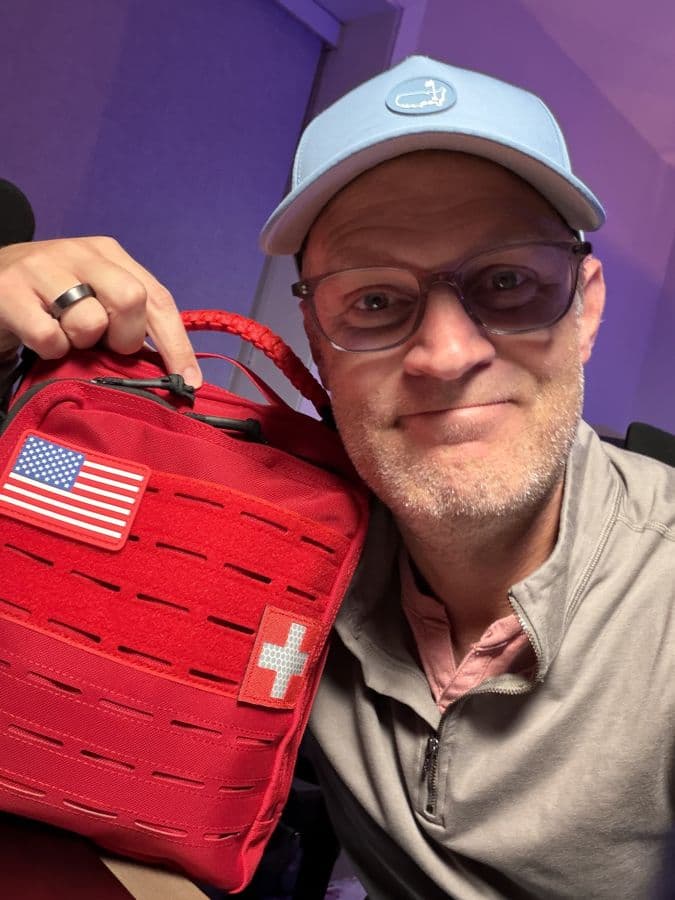
That's why I keep a first aid kit in the car all the time. The one I show in my video is a MyMedic. A kit like that is easy to buy and keep in the car, and it lets you handle the small boo-boos and even some of the bigger bleeding problems you might face. My full take on it is in my review of the MyMedic MyFAK. If you want the grade, that live review page is the source. I am not restating or changing scores here.
Mine rides in the back of our Yukon, secured so it doesn't fly around. Wherever yours goes, keep it somewhere you can actually reach it, and strap or secure it so it doesn't become a projectile in a crash. I add a genuine C-A-T tourniquet. A bleeding-control kit belongs next to that bag, not in place of it.
Gear does not replace a Stop the Bleed or CPR class. A kit is only as good as your hands, so get the class too.
You can compare other car kits on Best car first aid kit and Car kit before the drive.
After the crew arrives
Once police and fire have the scene locked down, you can get out of the car and check everybody over. Step back enough that the crew can work. Tell them the kids' ages, anything that changed, and whether anyone is unaccounted for.
If another adult can keep the uninjured kids together, off the roadway, that helps.
This page is not an insurance or police-report guide. When it is safe, you will also need the other driver's information and to follow local reporting rules.
If you drive in winter, I already have a winter car kit for families and a shorter winter page.
Common questions
What should I do first after a crash with kids in the car?
Stay calm and make sure each kid is okay and talking to you. If the car is smoking or on fire, get everyone out and away from traffic. If not, and you are on an active road, stay in the car with seatbelts on, or pull well off the road if the car still drives. Call 911, tell them kids are in the car and where you are, and follow the dispatcher's instructions.
Is it safe to get out of the car after a crash?
Not on an active roadway, unless the car is smoking or on fire. Passing drivers are the biggest danger at a crash scene. Stop the car from rolling, check for smoke, and if the car still drives, pull as far off the road as you can. Otherwise stay buckled, turn on hazards, call 911, and wait for police and fire to block the road before you get out.
Should I take my kids out of their car seats after a crash?
Do not unbuckle everyone just to get out and stand on the roadway. On an active road, keeping everyone buckled in the car is usually safer until help blocks traffic. If the car is on fire or the scene is not safe, get to safety and take the kids with you. There is no single rule for every crash. Call 911 and do what the dispatcher says.
Should I move an injured child after a car accident?
Do not move an injured child just to make them more comfortable or to get a better look. If you are in immediate danger, get to safety. If the dispatcher tells you to move them, follow that instruction. Otherwise, stay with them, keep them as still and calm as you can, and wait for the crew. This is not a diagnosis. If a child is hurt, call 911.
How do I know my car seat is installed correctly?
Follow your car seat's manual and your vehicle owner's manual, then have it checked by a certified child passenger safety technician. Many fire departments have one, but not all, so call ahead. NHTSA lists free inspection locations at nhtsa.gov/carseat. Videos can help you get familiar with a seat, but they vary. Buckle your kids in every ride.
What should I keep in the car for a bad day on the road?
I keep a first aid kit in the car all the time. Mine is a MyMedic, and it rides secured in the back of our Yukon. My review of the MyMedic MyFAK is on this site. I add a genuine C-A-T tourniquet from North American Rescue. A bleeding-control kit belongs next to that bag, not in place of it. Gear does not replace a Stop the Bleed or CPR class. If someone is hurt, call 911.
When should I call 911 after a crash, even a smaller one?
If anyone is hurt, not breathing normally, bleeding in a way you cannot control, or you are not sure, call 911. Call if the car is in traffic, if you cannot get to a safe spot, or if a child was in the car and you are worried. You do not have to wait until you are certain. Stay on the line and follow the dispatcher's instructions.
Is this medical advice? What should I do in an emergency?
No. This is general preparedness information, not medical advice, not a diagnosis, and not a class. It does not replace 911, your clinician, or a hands-on first aid or CPR course. If someone is badly hurt, not breathing normally, choking, or bleeding in a way you cannot control, call 911. Do it early. Then follow the dispatcher's instructions.
Related
For the kit itself, start with Best car first aid kit, Car kit before the drive, and the MyMedic MyFAK review. For bleeding control, see Stop the Bleed, fake versus real C-A-T, and the seller rule on Build your own kit. I also wrote what to do while you wait for the ambulance and a home fire escape plan with kids. Winter drivers can use the winter car kit for families and winter pages. More about me is on About, and the full legal language is on Disclaimer.
General info only, not medical advice. In an emergency, call 911. It doesn't replace a hands-on first aid or CPR class.
Best First Aid Kits for Families (2026) is the family kit list.