Blog
What to do while you wait for the ambulance
· Ryan Fields-Spack, former fire captain, 20+ years as a paramedic · Education only. Call 911 in an emergency.
Who picks these kits
If someone in your house is badly hurt, call 911 first. This page is about the minutes after you have already called: what to tell the dispatcher, what to do with your hands and your head, and how to help the crew find you and get to work.
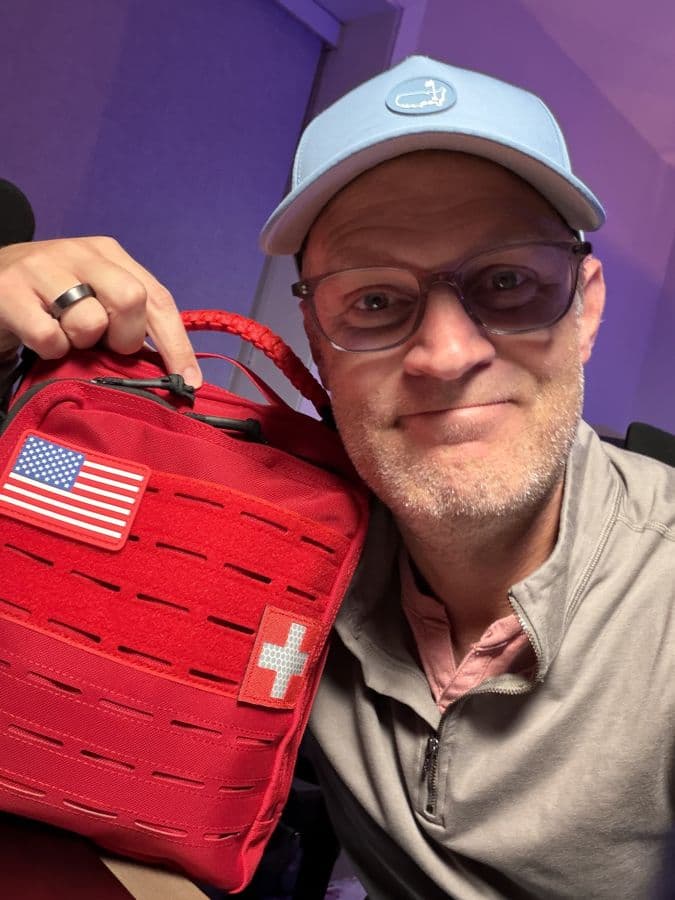
I'm Ryan, a dad of three and a former Aurora fire captain and paramedic. Dad, if you have ever had to make this call for your wife or one of your kids, you know it can be incredibly nerve-wracking. That's normal. The good news is that there are a few simple things you can do while you wait that really help.
This is education, not medical advice, and it is not a class. In an emergency, call 911, then follow the dispatcher's instructions. More about me is on About. The full disclaimer is on Disclaimer.
Call 911 first
The most useful thing you can do, early, is call 911. Do not wait to "see if it gets better" if someone is badly hurt, not breathing normally, choking, or bleeding in a way you cannot control.
Here's why early matters. When you call, the dispatcher starts sending help right away. In a lot of places that means police, an ambulance, and the fire department, and all of them are coming to you. Firefighters have to get in their rig and drive over to your house, and that will probably take about eight minutes. Ambulances are often already out on the road or staged nearby, so they can sometimes get there a little quicker. Police may show up at about the same time. Every one of those minutes starts when you dial, so dial early.
How fast help gets to you depends on where you live, the time of day, and how busy your local crews are. Rural areas can take longer. Plan for the wait, and use it well.
Stay on the line. Do not hang up until the call-taker tells you to. If you reached a local emergency number that is not 911, stay on that line and follow their instructions.
What to tell the dispatcher
You do not need a perfect script. Official 911.gov guidance, at a high level, is enough to remember.
They typically need your location, including an apartment, unit, or room number if you have one; the phone number you are calling from; and a short description of what happened.
They may ask whether the person is awake and breathing. Answer as clearly as you can. If you do not know, say you do not know.
If children are in the house, say so, and give ages if you know them.
If you called from a cell phone and you are not sure the address is right, say that. Look at a street sign, a house number, or a bill if you can do it safely.
Stay on the line and follow their instructions
The dispatcher may give you instructions while the crew is on the way. Those instructions are the plan until help arrives. If they tell you to start CPR, follow their instructions. Dispatchers are trained to coach you through it, step by step, even if you have never taken a class. This page will not teach CPR steps.
What to do while you wait
Follow the dispatcher first. Everything else on this list comes after that, and only if you can do it safely.
Stay calm, and lead
Stay calm, stay composed, stay confident, and help everybody around you do the same. You lead the situation, Dad. If you're calm and composed, everybody else will be too. Your kids are watching your face and listening to your voice. A calm dad gives everyone else in the room permission to be calm.
That doesn't mean you have to feel calm. It means you slow your voice down, keep your words simple, and give people small jobs: unlock the door, turn on the porch light, grab the medicine list, take the little ones to the other room.
Airway, breathing, circulation: what I look at
If your kid or your wife is badly hurt, here's the order I think in, using whatever training you have:
- Airway. Is their airway open? Are they having trouble getting air in?
- Breathing. Are they breathing okay?
- Circulation. For a parent, that mostly means: are they bleeding? If they are, use firm, direct pressure the way Stop the Bleed teaches it.
Then keep everybody as calm and relaxed as you can while you wait.
One important note for parents. In my recording I mention checking for a pulse. That's something trained providers do. If you are a parent and the person is not responding and not breathing normally, do not stop to hunt for a pulse. The American Heart Association teaches lay rescuers to start CPR right away in that situation, and the 911 dispatcher will coach you through it. Looking for a pulse can cost time that matters. If you're not sure, tell the dispatcher exactly what you see and do what they say.
A CPR class is the best way to get comfortable with this before you ever need it. Many are short, and some are free.
Get the information ready
When the paramedics walk in, the first thing they're going to want to know is what happened. Then they're going to want to know the person's medicines, medical history, and allergies. Their name and date of birth help too. The more of that you can give them, the faster they can start treating your kid, your wife, or whoever you called for.
If you can have that ready, even written down on a list you can hand them, that's even better. It lets them hit the ground running. If you have a minute while you wait, and only if it doesn't take you away from the person who's hurt, grab it.
Do not delay the call to go looking for paperwork. And it's worth doing the list now, on a quiet night, for everyone in your house: each person's name, date of birth, medicines, allergies, any medical conditions, and a current phone number for their doctor. Keep it somewhere you can grab it fast, like the fridge or your phone.
What not to give
Do not give food, drink, or medicine unless the dispatcher tells you to. This page will not name a dose or a drug.
Call 911 again if the person's condition changes in a way that worries you.
What not to do
Don't drive them to the hospital yourself, in most cases
Call 911 and stay where you can be found. Driving away can make you harder to find, and you cannot drive and care for someone at the same time. If the dispatcher tells you something different for your situation, do what they say.
Don't move someone just to make them more comfortable
Do not move an injured person just to get a better look or to get them onto a couch. If the dispatcher tells you to move them, or if you and they are in immediate danger (for example, a fire), follow that instruction. Otherwise, stay with them, keep them as still and calm as you can, and wait for the crew.
I am not going to write spine, neck, or "recovery position" how-to steps on this page.
Don't turn this into a class
A kit in the house is useful. A Stop the Bleed or CPR class is more useful than a kit you have never practiced with. If bleeding comes up, use the way Stop the Bleed teaches it. This page will not teach that skill.
The free checklist can help you see what you already have at home.
Make it easier for the crew to find you
Whatever you can tell the dispatcher about where you are, while you're on the phone with them, is extremely helpful. They pass it straight along by radio to the crews that are coming, and that helps them find you faster.
Start with the basics: the street address, and the apartment or unit number if you have one. Then add anything a driver could see from the road:
- A landmark. A big tree, a specific type of rock, a gate, a church, a bright mailbox.
- Counting from a turn. "Third house on the left after you turn off the main road."
- Your house itself. The color of the house, a flag out front, a boat in the driveway. Anything that's easy to spot.
- Complexes and rural roads. The building letter, a gate code, which entrance to use, or the long driveway past the red barn.
Crews can rely on technology all day long, but sometimes it doesn't work. GPS can drop you at the wrong end of a road, and a cell call doesn't always give an exact spot. So the more you can tell them about where you are, the better.
A few more things help a lot:
- Turn on an outside light.
- If another adult can do it safely, have them wait where the crew can see them and wave the ambulance in, especially at night.
- Keep the path to the door clear. Unlock the door. Put pets in another room.
- Do this one now, not on the night: NFPA suggests checking that your house number is clearly visible from the road, and adding numbers if it isn't. It's a cheap fix that helps every crew that ever comes to your house.
After the crew arrives
Step back enough that they can work, and stay close enough to answer questions.
The family that helps the most is the one that can calmly tell the crew what happened, and hand over the medicine and allergy list if they have one. That's it. You don't have to be perfect. Calm and clear is plenty.
Tell them anything that changed after you called.
If other children are in the house, keep them with another adult if you can, out of the way but not ignored.
Common questions
What should I tell the 911 dispatcher?
Stay on the line and answer the call-taker's questions. Official 911.gov guidance says they typically need your location, including an apartment or room number if you have one, the phone number you are calling from, and a short description of what happened. They may ask whether the person is awake and breathing. Follow their instructions. Do not hang up until they tell you to. If someone is badly hurt, calling 911 is the right first step.
What should I do while I wait for the ambulance?
Follow the dispatcher's instructions first, and stay calm so your family can too. If you can do it safely, turn on an outside light, clear a path to the door, put pets in another room, and have someone wave the ambulance in. Have the person's medicines, history, and allergies ready, written down if you can. Do not give food, drink, or medicine unless the dispatcher tells you to. Call 911 again if things change.
Should I check for a pulse while I wait for the ambulance?
Not as a parent. If the person is not responding and not breathing normally, the American Heart Association teaches lay rescuers to start CPR right away, without stopping to hunt for a pulse. The 911 dispatcher will coach you through it. Pulse checks are for trained providers. If you are not sure what you are seeing, tell the dispatcher exactly what you see and follow their instructions.
What information will the paramedics want when they arrive?
First, what happened. Then the person's medicines, medical history, and allergies, plus their name and date of birth. Having that ready, ideally on a written list you can hand the crew, lets them start treating right away. Do not delay the 911 call to find paperwork. Make the list now, on a quiet night, for everyone in your house.
Should I drive them to the hospital myself instead of waiting?
In most cases, no. Call 911 and stay where you can be found. The dispatcher needs your exact location so the ambulance can get there. Driving away can make you harder to find, and you cannot drive and care for someone at the same time. Follow the dispatcher's instructions. If they tell you something different for your situation, do what they say. If someone is badly hurt, call 911.
Should I move someone who is hurt while I wait?
Do not move someone just to make them more comfortable. If the dispatcher tells you to move them, or if you and they are in immediate danger, for example a fire, follow that instruction. Otherwise, stay with them, keep them as still and calm as you can, and wait for the crew. This is not a diagnosis and not a first-aid class. If someone is badly hurt, call 911.
How can I help the paramedics find our house?
Give the dispatcher your street address and unit number, then anything a driver can see: a landmark like a big tree or rock, how many houses down from a turn, your house color, or a flag out front. GPS does not always work. Turn on an outside light, keep the path clear, put pets away, and if another adult can, have them wave the crew in. Stay on the line until told to hang up.
Is this medical advice? What should I do in an emergency?
No. This is general preparedness information, not medical advice, not a diagnosis, and not a class. It does not replace 911, your clinician, or a hands-on first aid or CPR course. If someone is badly hurt, not breathing normally, choking, or bleeding in a way you cannot control, call 911. Do it early. Then follow the dispatcher's instructions.
Related
If you want the broader family plan, meeting places, and kit sizing, start with the family plan and the checklist. New dads who want the first-weeks frame, not a second 911 lesson, can use the New Dad Survival Guide. I also wrote a home fire escape plan with kids and what to do after a crash with kids in the car. More about me is on About, and the full legal language is on Disclaimer.
General info only, not medical advice. In an emergency, call 911. It doesn't replace a hands-on first aid or CPR class.
Best First Aid Kits for Families (2026) is the family kit list.