Guide
Winter car kit for families: the November swap-in checklist
How I set up a winter car kit for my family before the first storm: what I add to the everyday kit, how I keep the kids warm in car seats, what to do if you're stuck, and a printable checklist.
· Ryan Fields-Spack, former fire captain, 20+ years as a paramedic · Education only. Call 911 in an emergency.
Who picks these kits
On this page
- Start with what you already have
- The winter swap-in: one bin, added in November
- Get unstuck and see out
- Stay warm
- Food, water and comfort
- Get help and be seen
- Keeping kids warm in car seats
- If you get stuck: my calm-dad game plan
- Before the first storm: the November car check
- Printable checklist: winter car kit for families
- Common questions
- Load the bin this weekend
Hey dads, Ryan here.
Where I live, every winter the first real storm closes a highway somewhere, and families end up sitting for hours in a car packed for a 20-minute drive. The ones who stay comfortable usually did one simple thing back in November: they swapped in a winter kit.
That's this guide. It isn't a survival-show bunker list. It's the add-ons that turn your everyday car emergency kit into a winter one, with the kids in mind. Grab my free printable checklist too.
Start with what you already have
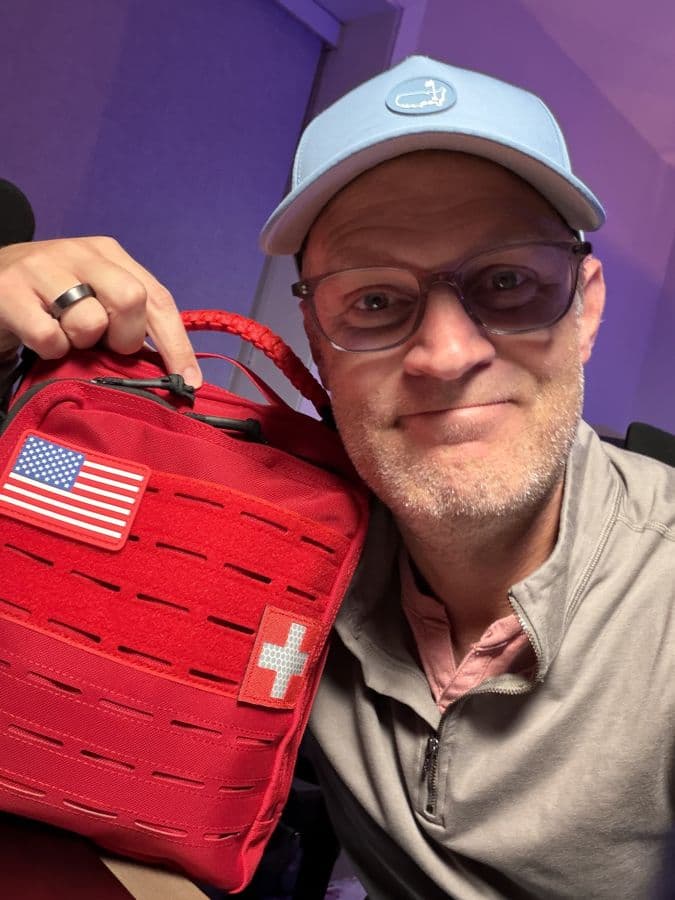
If you've built a year-round car kit, you're most of the way there: first aid kit, flashlight, jumper cables or a jump pack, reflective triangles, water, snacks and a phone charger. If you haven't, start with my car emergency kit checklist and come back for the winter layer. The year-round bag I start from is the MyMedic MyFAK.
The winter swap-in: one bin, added in November
I keep these in a separate bin or duffel. Load it the first week of November and pull it out in spring. Same weekend every year, so you never have to think about it.
Get unstuck and see out
- Snow brush and ice scraper
- Compact snow shovel
- A traction aid: a bag of sand or non-clumping cat litter, or traction mats
- Tire chains or cables if your roads require them (practice putting them on in the driveway first)
- Tow strap
- Extra winter-rated washer fluid
- Lock de-icer, kept in the house or your coat, not locked in the car
Stay warm
- One warm blanket or sleeping bag per person, wool or a synthetic that stays warm when damp
- Emergency (mylar) blankets as a backup layer
- Hats, gloves and wool socks for everyone, sized for the kids this year
- Hand and toe warmers, never right on bare or frostbitten skin
- Spare boots, or at least dry socks, for anyone who wears sneakers to school
Food, water and comfort
- Water bottles with a little room left in them, because water can freeze in a cold car
- Snacks that don't freeze solid, like granola bars, crackers, or nut butter packs if nobody has a nut allergy
- A thermos you can fill before longer drives
- A small activity kit for the kids: cards, a book, a coloring pad
Get help and be seen
- A fully charged power bank (cold drains batteries, so bring it inside to charge)
- A car charger cable
- A bright cloth or flag to tie to the antenna or door
- Headlamp and spare batteries
- Whistle
Keeping kids warm in car seats
This is the one families get wrong most often, so it gets its own section.
Bulky winter coats can leave a car seat harness too loose to protect a kid in a crash. Buckle the kids in wearing thinner layers and snug the harness. Then put the coat on backward over the harness, or lay a blanket over the top.
I keep the kids' blankets up front in the cabin, not in the trunk, so I can reach them.
If you get stuck: my calm-dad game plan
Nobody plans to get stranded. Here's what the major safety agencies recommend, in plain language.
- Call for help and say exactly where you are. Mile markers and exit numbers help.
- Stay with the car unless help is clearly close and it's safe to go. A car is easier to find than a person.
- Be visible. Turn on the hazards when it's safe to, and tie a bright cloth to the car.
- Keep the exhaust pipe clear of snow. A blocked tailpipe can push carbon monoxide into the car.
- Run the engine in short stretches to warm up and charge phones. Ready.gov suggests about 10 minutes an hour, with a window cracked a little for fresh air.
- Layer up early, before anyone gets cold. Blankets, hats and warmers (over clothes, never on bare skin) on the kids first.
- Keep moving a little. Wiggle hands and feet to stay warm.
- Keep the kids calm and busy. Snacks, a game, a story. Your calm is contagious.
Before the first storm: the November car check
The best winter kit is the one you never need because the car started. Ready.gov and NHTSA both list these checks before the snow flies:
- Battery and charging system
- Tires: tread and pressure (cold air drops tire pressure)
- Wipers and washer fluid
- Heater and defroster
- Lights and hazard flashers
- Antifreeze level
And one habit: keep the tank close to full in winter. It gives you heat if you're stuck and helps prevent fuel-line freeze-ups.
Printable checklist: winter car kit for families
Print it and tape it inside the bin lid.
Year-round kit (confirm it's there)
- First aid kit, restocked
- Flashlight or headlamp
- Jumper cables or a charged jump starter
- Reflective triangles
- Phone charger and power bank
Winter swap-in
- Snow brush and ice scraper
- Compact shovel
- Sand, cat litter or traction mats
- Tire chains (if required) and a tow strap
- Winter washer fluid
- A blanket or sleeping bag for each person
- Emergency (mylar) blankets
- Hats, gloves and wool socks, kid sizes updated
- Hand and toe warmers
- Spare dry socks or boots
- Water, with room to expand
- Snacks that won't freeze solid
- Kid activity kit
- Bright cloth or flag
- Whistle
- Spare batteries
November car check
- Battery tested
- Tires checked
- Wipers and fluid
- Heater and defroster
- Tank close to full
Write down the day you load the bin and the day you pull it out.
Common questions
What should be in a winter car emergency kit?
Everything in a year-round kit, plus a shovel, a scraper, a traction aid, warm layers and a blanket for each person, hand warmers, snacks that won't freeze, and a charged power bank. The checklists above cover it.
Should I keep water in the car in winter?
Yes, but expect it to freeze in a cold car. Leave room in the bottle, and bring a thermos or fresh bottles on longer trips.
How do I keep my kids warm if the car gets stuck?
Layers, hats and a blanket for each kid, kept in the cabin. Keep the exhaust clear, run the engine in short stretches, and add hand warmers over their clothes.
Is a prebuilt winter car kit worth it?
It can be a good start, but check the blankets (they're often thin) and whether there's enough for your whole family. See the MyMedic MyFAK, the kit database, and how I grade. A full hands-on review is still coming for most of them.
Load the bin this weekend
Pick a Saturday in early November. Load the winter bin, check the car, and set a spring reminder in my free tracker to swap it back out. Then print the free checklist so the whole family knows what's in the car.
Check your kit. Win the day.
General info only, not medical advice. In an emergency, call 911. It doesn't replace a hands-on first aid or CPR class. Follow your state's road and weather alerts, and skip travel in severe winter weather when you can.
Email the family checklist
The printable list for the car, the house, and the bag by the door. Free. Unsub anytime.