Blog
Home fire escape plan with kids
· Ryan Fields-Spack, former fire captain, 20+ years as a paramedic · Education only. Call 911 in an emergency.
Who picks these kits
If there is a fire in your house, get everyone out, stay out, and call 911 from outside. The work that makes that possible is the plan you practice on a quiet night: two ways out of every room, one meeting place, and a named person for each little kid who cannot get out alone.
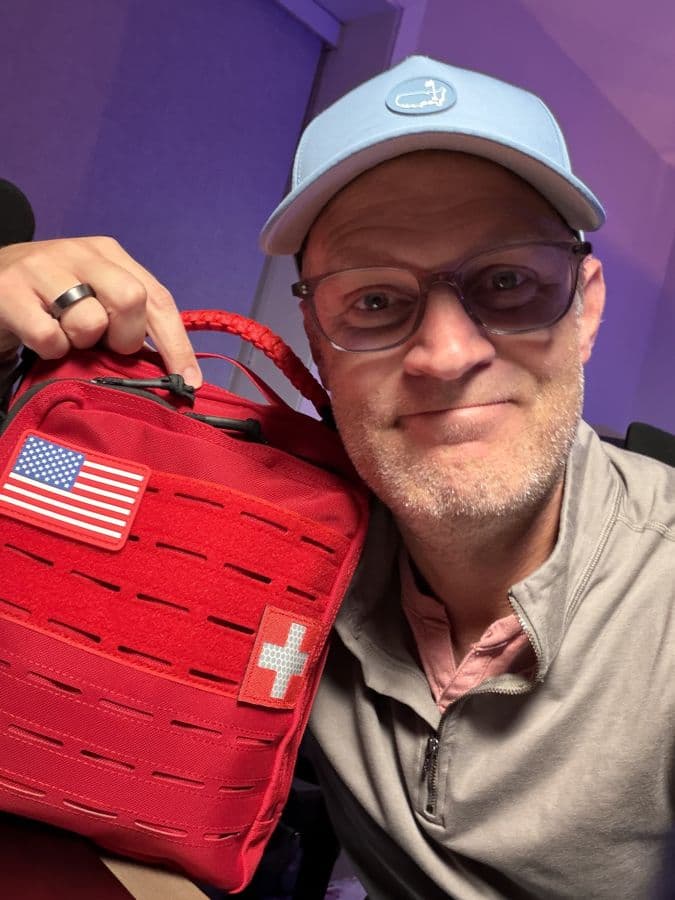
I'm Ryan, a dad of three and a former Aurora fire captain. Having a fire escape plan with your family is absolutely critical. Most of us don't think about it until we have to. If fire or smoke ever shows up in your house, you want your kids to already know exactly what to do.
This is a simple family plan, not a class and not a new set of rules. Official fire-escape guidance from NFPA and Ready.gov already covers the bones of it. I am writing the dad version, including how we do it at my house.
This is general preparedness information, not medical advice, and not a fire-training class. In a fire, get out, stay out, and call 911 from outside. More about me is on About. The full disclaimer is on Disclaimer.
Why a written plan matters when you have kids
A fire is loud, dark, and fast. NFPA says you may have as little as one or two minutes to get out once the smoke alarm sounds. A toddler will not invent an exit on the night. The plan has to exist before the alarm goes off.
We don't like to think a fire in our house could happen to us. But when it does, you want a plan. So this one is on you, Dad: get the plan in place and talk about it, especially with your kids. Your kids are going to love this. They get excited about having a plan, carrying it out, and practicing it. Lean into that.
Official guidance is to practice, not just talk about it. Ready.gov and NFPA both ask families to practice at least twice a year.
This page is about getting out of the house. Your broader family emergency plan, with supplies, out-of-neighborhood meeting places, and the seven-day target, lives on the family plan and the checklist. I also wrote about supplies and the seven-day frame in Your first number is seven. I am not rebuilding those pages here.
The three parts of the plan
Two ways out of every room
Start by deciding how your house is laid out and what the best way out is for each kid, so everybody ends up together outside as fast as possible.
Official fire-escape guidance is to find two ways out of every room, usually a door and a window. Walk the house in the daytime and name them out loud with the kids who are old enough to understand. NFPA suggests households with children draw a simple floor plan and mark both ways out of each room.
Here's how it works at our house. We have two kids upstairs and one on the main floor. Everybody knows to check their bedroom door first and feel for heat. If there's a lot of smoke, they close that door back up, yell for us, and use the window as their way out.
Teach your kids how to check the door the same way. Ready.gov says to feel the doorknob and the door before opening it. If either is hot, or smoke is coming in around the door, leave it closed and use the second way out. If it's cool, open it slowly.
If a kid sleeps on the second floor, plan for the window. A second-story window is only a way out if your kid can actually get down safely. NFPA says every family member, including children, must be able to escape from second-floor rooms, and suggests an escape ladder stored in or near the window. Read the ladder's instructions, and practice setting it up from a first-floor window. NFPA says kids should practice only with a grown-up, and only from a first-story window.
If they can't get out, keep the door shut and signal. If smoke or fire blocks both ways out, the plan is: keep the door closed, stuff something along the gap under the door if you can, go to the window, signal with a flashlight or a light-colored cloth, and call 911 if there's a phone in the room. Tell the dispatcher exactly which room you're in. That's NFPA and Ready.gov guidance, and it's worth saying out loud to your kids during practice.
If a window is a way out, make sure it actually opens, that screens come out quickly, and that an adult can help a child through it.
Get low under the smoke
Remember, smoke rises. As soon as your kids can get low to the ground and get out of the house, that's what you want. NFPA says everyone in the family should practice getting low and going under the smoke to the exit during your drill.
And if there's a lot of fire outside their door, they keep that door closed and go to the window instead. A closed door slows smoke, heat, and fire. NFPA also suggests sleeping with bedroom doors closed for the same reason.
One meeting place, a safe distance from the house
Once people get out, everybody needs to know exactly where to go. At our house we have one dedicated meeting spot: the sidewalk behind the house. Everybody knows to meet there and can make sure we're all together.
Official guidance from NFPA is to pick a meeting place a safe distance in front of your home, like a mailbox, a light pole, a neighbor's house, or a stop sign, so firefighters see you when they pull up. Whatever spot you choose, front or back, keep it a safe distance from the house, use the same one every time, and walk the kids to it so they can find it in the dark. If your spot is out back like ours, decide ahead of time who goes to the front to tell the firefighters that everyone is out, or who is missing.
This is different from the out-of-neighborhood meeting place on a family emergency plan. The fire meeting place is right outside the home. The other one is for a longer emergency, when you cannot stay near the house.
Who does what, and who is the backup
Who sticks together, who splits up, and where do you all meet? Those are the decisions to make now. If you've got three kids like me, you can give each of them a specific role.
Here's ours. Our middle kiddo, Callan, takes care of his sister. His job is to stay right on her as they get out. He's so caring with his little sister that he's going to do everything he can to watch out for her. My wife and Bromley, our bigger kiddo, get together and beeline it out of the house. And I'm going to do a sweep and make sure we are all together.
A sweep happens on the way out only. That means checking rooms between you and the exit as you leave, not going back in. Once you're out, stay out. If someone is missing, nobody goes back inside. Tell the 911 dispatcher and the firefighters who's missing and where they might be. NFPA is clear on this: once you're out, stay out. Firefighters have the gear and the training to go in.
Official fire-escape guidance from NFPA says to assign someone to help each infant or young child who can't get out alone, and to name a backup in case that person isn't home. A big kid helping a little one is a great job to give, and every little kid who can't get out on their own should still have a grown-up named for them, plus a backup. Write the names down. Practice it. "We'll figure it out" is not a plan.
Practice without scaring little kids
Your kids do fire drills at school all the time. Have you done one at your house? It's worth doing, especially with little kids. Practice is how they learn exactly what to do and how to get out.
Here's an easy way to do it. Talk through the plan with your kids ahead of time. Then push the test button on your smoke alarm and treat it like the real thing. In my recording I say don't give them any warning, and see how they pull it off. Once they've had that practice, they'll be ready the next time, and they'll be a lot safer if you ever need to get out of your house for real.
For little kids, start with planned drills. I walk my kids through the plan first, and that's the key. NFPA says to let children master the plan and practice it before you ever run a surprise or nighttime drill, and that the goal is to practice, not to frighten. Telling kids there will be a drill before bed can work as well as a surprise. So for a toddler or preschooler: keep it short and calm, tell them it's practice, walk to the meeting place together, and save the no-warning drill for when they already know the plan cold.
Ready.gov and NFPA suggest practicing at least twice a year, including so kids learn the sound of the smoke alarm. During the drill, notice whether every kid actually wakes up to the alarm. NFPA says if one doesn't, assign someone to wake them, in the drill and in a real fire.
Official pages sometimes frame a drill against a short exit time. That framing belongs to Ready.gov and NFPA. I am not turning it into a new Dad Kit Check rule or a score.
Smoke alarms, briefly
Working smoke alarms are part of the plan, not a separate post. Official guidance is to have working smoke alarms and to test them. NFPA recommends alarms in every sleeping room, outside each sleeping area, and on every level of the home. I am not going to recommend a detector brand I have not reviewed.
A later post can cover carbon monoxide detectors.
Get out, stay out, call 911
In a fire, get out, stay out, and call 911 from outside. Official guidance is that children should be taught never to go back inside a burning building. A kit, a pet, a phone, or a wallet is not worth a second trip.
If someone is still inside, tell the 911 call-taker and the firefighters when they arrive. Do not go back in yourself.
Ready.gov also says to teach kids not to hide from firefighters.
If someone is hurt once you are out, tell the dispatcher and follow their instructions. I wrote a separate page on what to do while you wait for the ambulance.
How this fits with your family emergency plan
The fire meeting place is right outside the home.
The broader family plan is an out-of-neighborhood meeting place, contacts, and supplies. That lives on the family plan, the checklist, and Your first number is seven. There is also a supply checklist if you want that list in one place.
A first aid kit is useful after you are out. It is not a reason to go back in. If you want help choosing a home kit, I already wrote Best home first aid kit.
Common questions
What should be in a home fire escape plan when you have kids?
Keep it simple. Official NFPA and Ready.gov guidance is to find two ways out of every room, pick one meeting place a safe distance from the house, and assign a person, plus a backup, to help each young child who cannot get out alone. If kids sleep upstairs, keep an escape ladder by the window and practice with it. Practice the plan twice a year. In a fire, get out, stay out, and call 911 from outside.
How do I practice a fire drill without scaring my toddler?
Walk through the plan first. NFPA says to let kids master the plan and practice before running a surprise or nighttime drill, because the goal is to practice, not to frighten. Keep it short and calm, tell them it is practice, push the smoke alarm test button so they learn the sound, and walk to the meeting place together. Save a no-warning drill for kids who already know the plan.
How do kids get out of a second-floor bedroom in a fire?
Plan it before you need it. NFPA says everyone, including children, must be able to escape from second-floor rooms, and suggests an escape ladder stored near the window. Practice setting it up from a first-floor window, with a grown-up. If a child cannot get out, they keep the door shut, signal at the window with a flashlight or light cloth, and call 911 if they can.
Where should we meet after we get out?
Pick one place a safe distance from the home, and use it every time. NFPA suggests a spot in front of the house, like a mailbox, a light pole, a neighbor's house, or a stop sign, so firefighters see you. Walk your kids to it so they can find it. If your spot is in back, decide who tells the firefighters everyone is out. Stay there and call 911 from outside.
Who gets the baby or the toddler out?
Your plan has to name a person. Official NFPA guidance says to assign someone to help each infant or young child who cannot get out alone, and to name a backup if that person is not home. An older kid can be a buddy for a younger one, but every little kid still needs a named grown-up. Write it down and practice it. Once you are out, stay out, and call 911 from outside.
Should we go back inside for pets, phones, or the first aid kit?
No. Get out, stay out, and call 911 from outside. NFPA is clear that you should never go back into a burning building, and children should be taught the same. If a parent sweeps for kids, that happens on the way out only. If someone is still inside, tell the 911 call-taker and the firefighters when they arrive. Do not go back in yourself.
What should I do after everyone is outside?
Get to your meeting place and keep everyone there. Call 911 from outside if you have not already. Official guidance is to stay out and to tell the firefighters if anyone is still inside or unaccounted for. Do not go back in for a pet, a phone, or a kit. If someone is hurt once you are out, tell the dispatcher and follow their instructions.
Related
The broader family plan, including the out-of-neighborhood meeting place, is on the family plan. Use the checklist and Your first number is seven for supplies, and the supply checklist if you want that list on its own. New dads can start with the New Dad Survival Guide. If someone is hurt once you are out, see what to do while you wait for the ambulance. For the car, see what to do after a crash with kids in the car. For a home kit after you are out, see Best home first aid kit. More about me is on About, and the full legal language is on Disclaimer.
General info only, not medical advice. In an emergency, call 911. It doesn't replace a hands-on first aid or CPR class.
Best First Aid Kits for Families (2026) is the family kit list.