Blog
Should You Buy a First Aid Kit or Build One? Here's Mine
· Ryan Fields-Spack, former fire captain, 20+ years as a paramedic · Education only. Call 911 in an emergency.
Who picks these kits
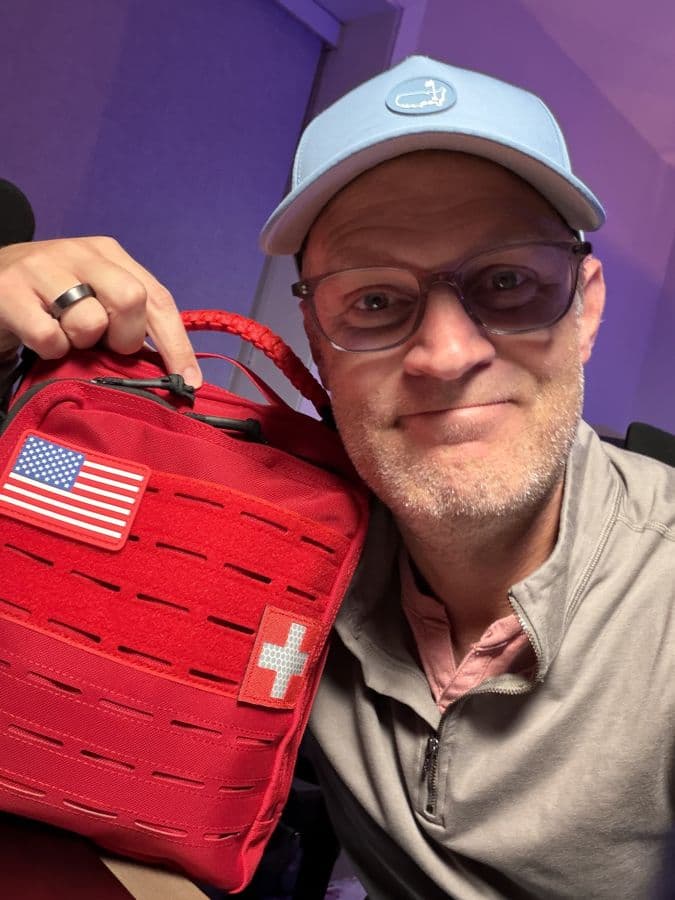
Should you buy a first aid kit or build one yourself? Buy one if you want to be covered this week. A good pre-built kit is a real start, and I've bought and graded a lot of them. Build one if you want a kit you know by heart. That's why my personal kit is my favorite: I built it, so I know where every piece is.
If you're looking at first aid kits this Black Friday, here's how I'd think about it. Pick the kit that fits where it will live. Then open it, see what's actually inside, and add what's missing, starting with the bleeding gear.
I'm Ryan. I'm a former paramedic and fire captain in Aurora, Colorado, and a dad of three. I take keeping my family safe very seriously, and this is the kit I built for taking care of my kids when we're on the go.
As an Amazon Associate I earn from qualifying purchases.
As an Amazon Associate I earn from qualifying purchases.
Buy the C-A-T only if the listing says shipped and sold by Amazon.com. If the seller is anyone else, get it from North American Rescue or an authorized dealer. Prefer to build? Start with my build-your-own-kit checklist, or compare the kits I've tested and graded.
If this is an emergency, call 911.
Why did I build my own kit?
I wanted one kit thin enough to carry in my ski backpack and my hiking backpack, with what I'd want for the injuries I'd actually expect out there. A pre-built kit makes those choices for you. Building my own let me make them myself.
The case is a clamshell. If I'm in the snow taking care of somebody, I can set it down and it won't flop open and spill everywhere.
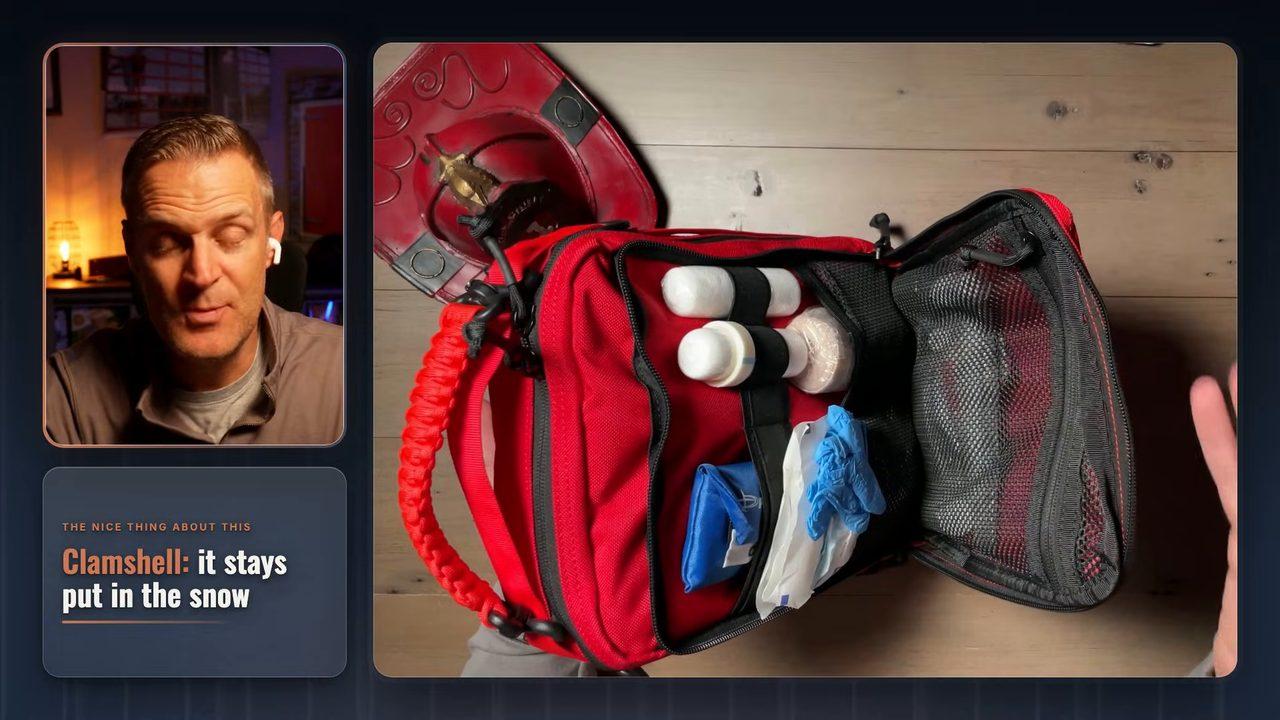
What's on the grab-first side?
The things I need in the first minute. Gloves come first, then bleeding pads, then something to hold them in place.
- Gloves. First and foremost, especially if I'm helping someone who isn't my kid or my wife.
- 4x4 gauze pads and ABD pads. They're thick, and they're my first bleeding supplies.
- A small roll of Kerlix (rolled gauze) to wrap over the pads so they stay on. This is for light bleeding, things that aren't too bad.
- A small ACE bandage for when I need to wrap things a little tighter.
- A CPR mask, right on top and ready to go.
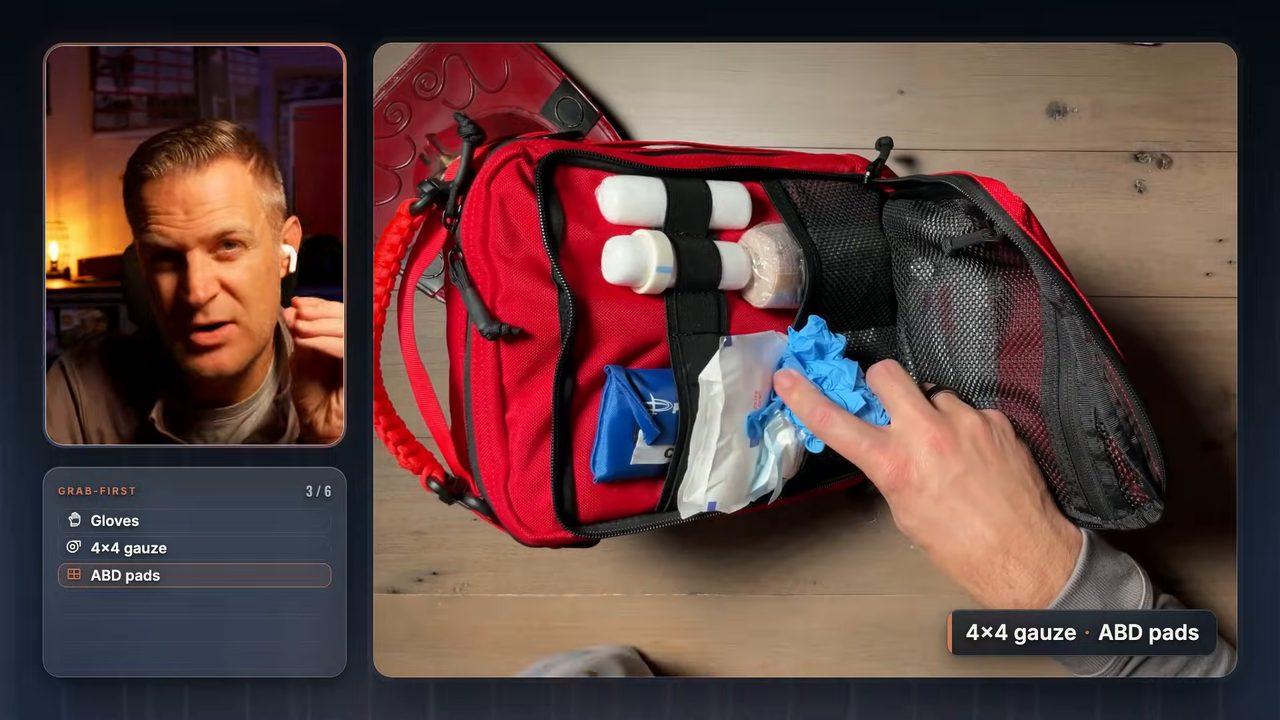
Behind those is what I call the boo-boo pocket: extra 4x4s, wipes, Band-Aids and hand sanitizer. That's the stuff kids need most days.
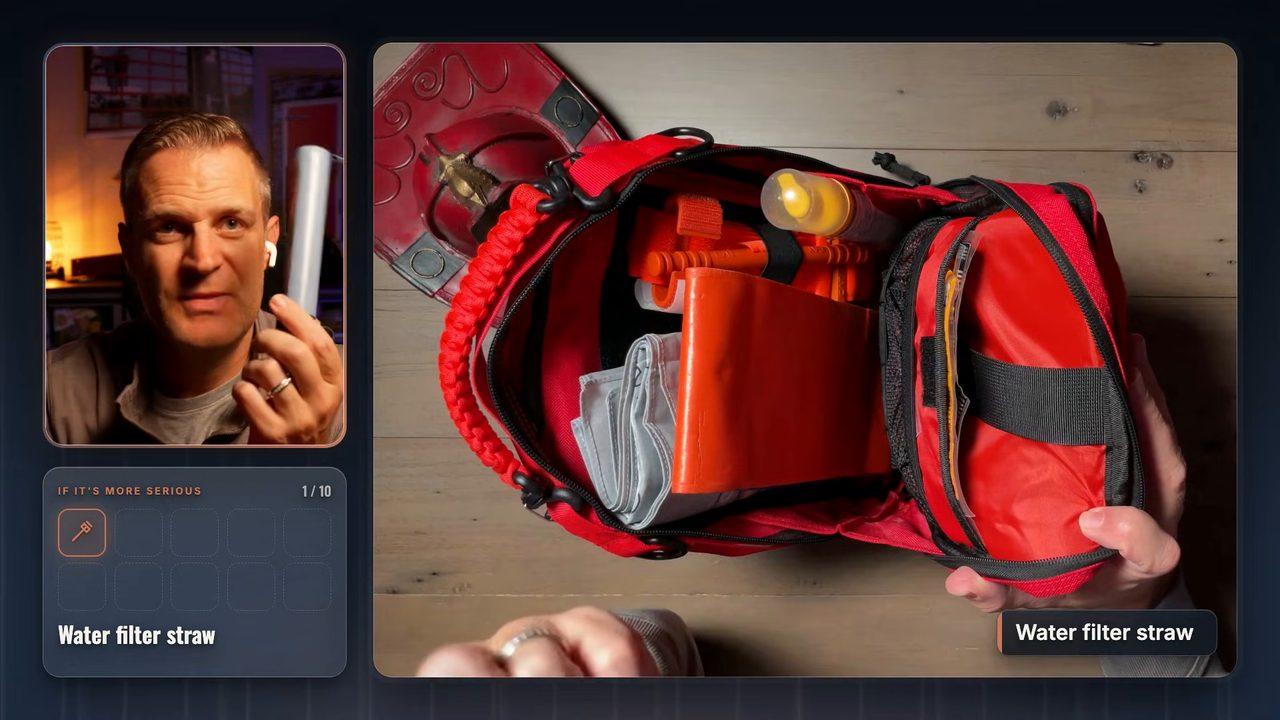
What's on the "more serious" side?
If it's more serious, I open the other side.
- A water filter straw, in case we're stuck somewhere without water.
- A SAM splint, a moldable splint for an arm or a leg.
- A small handkerchief I can use as a sling.
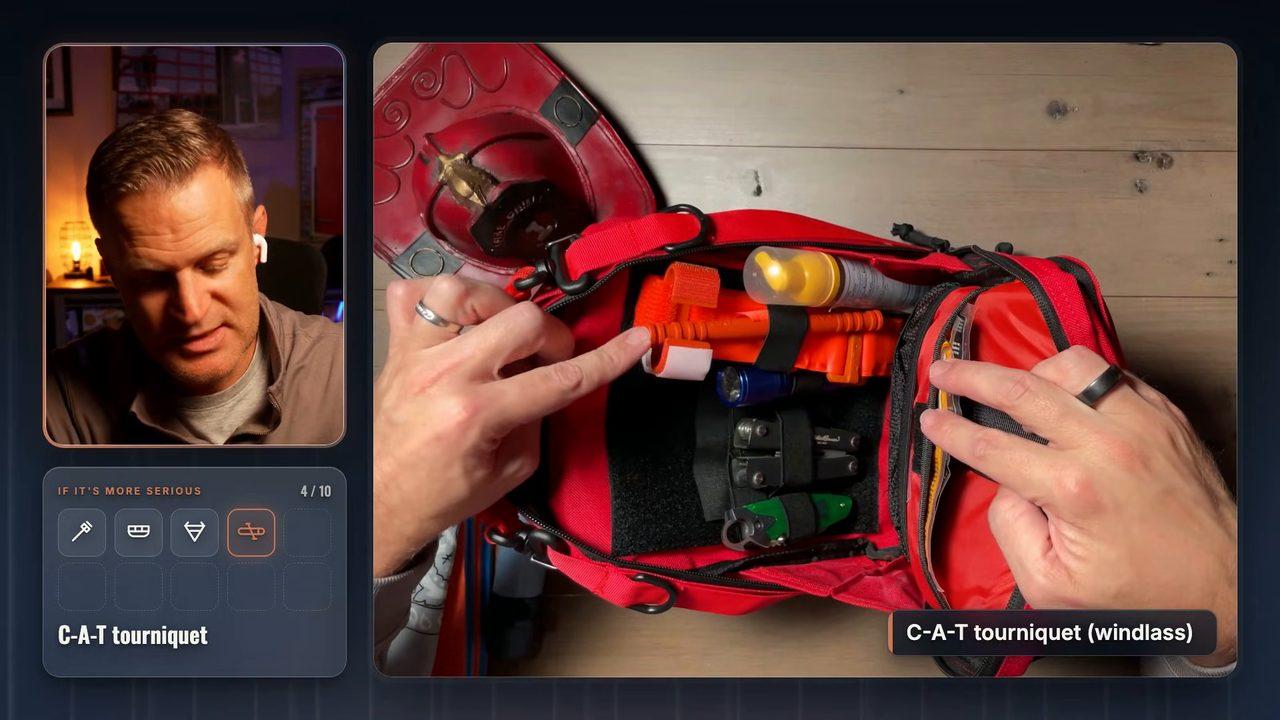
- A genuine C-A-T tourniquet. Not a knockoff.
- Foaming antiseptic gel.
- A flashlight, a Leatherman and a knife.
- Hand warmers and a warming blanket, so the kids have what they need if we're out in the cold.
I'm not going to teach splinting or tourniquets in a blog post. That's what a hands-on first aid class and a Stop the Bleed class are for.
Why does the tourniquet have to be genuine?
Because knockoffs are sold everywhere, and they look close to the real thing. Buy a C-A-T from North American Rescue or an authorized dealer. Here's how I tell a real C-A-T from a fake.
What am I adding from a Stop the Bleed kit?
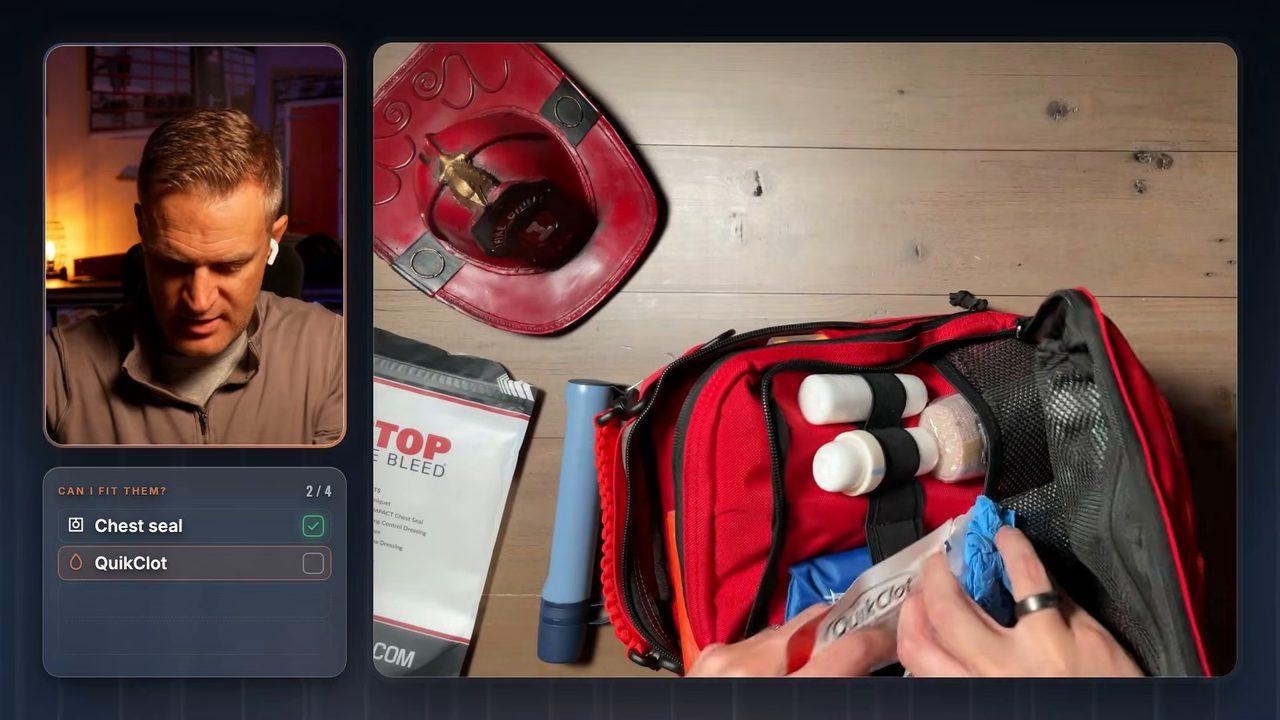
As I've used this kit, I've noticed it's missing a couple of things for bleeding. So I'm pulling them from the Rescue Essentials Stop the Bleed kit I reviewed, which has bleeding-specific gear you can't always get off the shelf:
- A chest seal
- QuikClot
- Compressed gauze
- A trauma bandage
The QuikClot fit up top with my ABD pads. The trauma bandage can lie flat. The compressed gauze is the one I may leave out if it doesn't fit, since I already have ABD pads. Here's my Rescue Essentials Stop the Bleed kit review.
What's the catch with building your own?
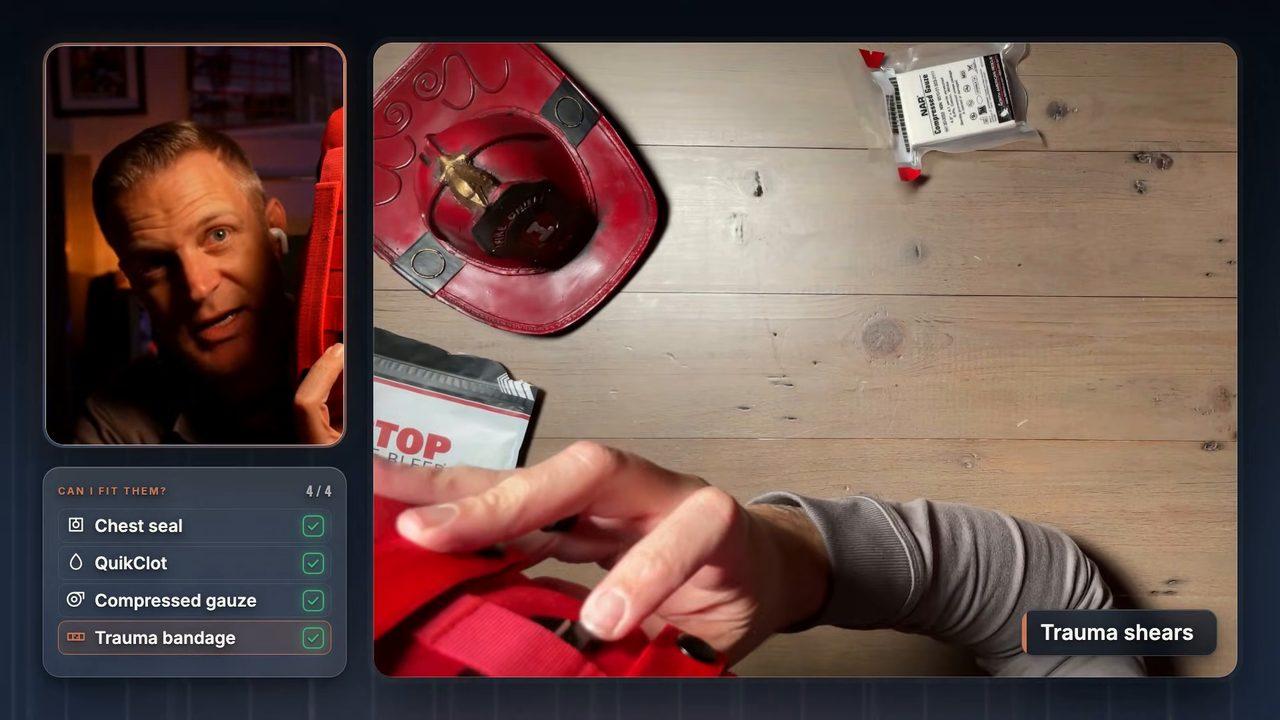
It gets thick. With everything in, and good trauma shears on the back (the kind I used as a medic), it's thicker than I'd like. I'm going to try it in my ski bag and report back. If space gets tight, the water straw moves out to the ski bag.
That's the honest trade. A kit you build is a kit you know, but you have to make every choice. A pre-built kit gets you started faster.
So should you buy or build a first aid kit this Black Friday?
- Want something in the car or the pack this week? Start with one of the kits I've graded, then open it and see what's inside.
- Want a kit you know by heart? Build it from my build-your-own-kit checklist.
- Either way, add the bleeding gear. A genuine C-A-T and the basics on my free Stop the Bleed kit checklist.
- Not sure where to start? Take the free kit-plan quiz.
As an Amazon Associate I earn from qualifying purchases.
As an Amazon Associate I earn from qualifying purchases.
As an Amazon Associate I earn from qualifying purchases.
As an Amazon Associate I earn from qualifying purchases.
Prices and sellers change, so check the listing before you buy.
Common questions
Is it better to buy a first aid kit or build one?
Buy one if you want to be covered this week. Build one if you want a kit you know by heart. Either way, open it, see what's inside, and add the bleeding gear.
What's in your personal first aid kit?
Gloves, 4x4 gauze, ABD pads, Kerlix, an ACE bandage and a CPR mask on the grab-first side. Wipes, Band-Aids and hand sanitizer in the boo-boo pocket. A water filter straw, a SAM splint, a handkerchief for a sling, a genuine C-A-T tourniquet, antiseptic gel, a flashlight, a Leatherman, a knife, hand warmers and a warming blanket on the other side. Trauma shears on the back.
What are you adding from the Stop the Bleed kit?
A chest seal, QuikClot, compressed gauze and a trauma bandage, if they all fit. The compressed gauze may stay out.
Where do I buy a real tourniquet?
From North American Rescue or an authorized dealer. On Amazon, only if the seller is the maker, Amazon.com or an authorized dealer.
Does a kit replace a class?
No. Take a hands-on first aid class and a Stop the Bleed class. In an emergency, call 911. This is education, not medical advice.
Did anyone pay for this?
No. The Amazon buttons are affiliate links. As an Amazon Associate I earn from qualifying purchases.
What did I miss? If you've got EMS experience, tell me in the comments on the video if something critical should be in this bag.
Related
My family first aid kit for hiking and skiing · Rescue Essentials Stop the Bleed kit review · Fake vs real C-A-T tourniquet · Best First Aid Kits for Families (2026)
Best First Aid Kits for Families (2026) is the family kit list.