Blog
My Family First Aid Kit for Hiking and Skiing
· Ryan Fields-Spack, former fire captain, 20+ years as a paramedic · Medically reviewed · Education only. Call 911 in an emergency.
Who picks these kits
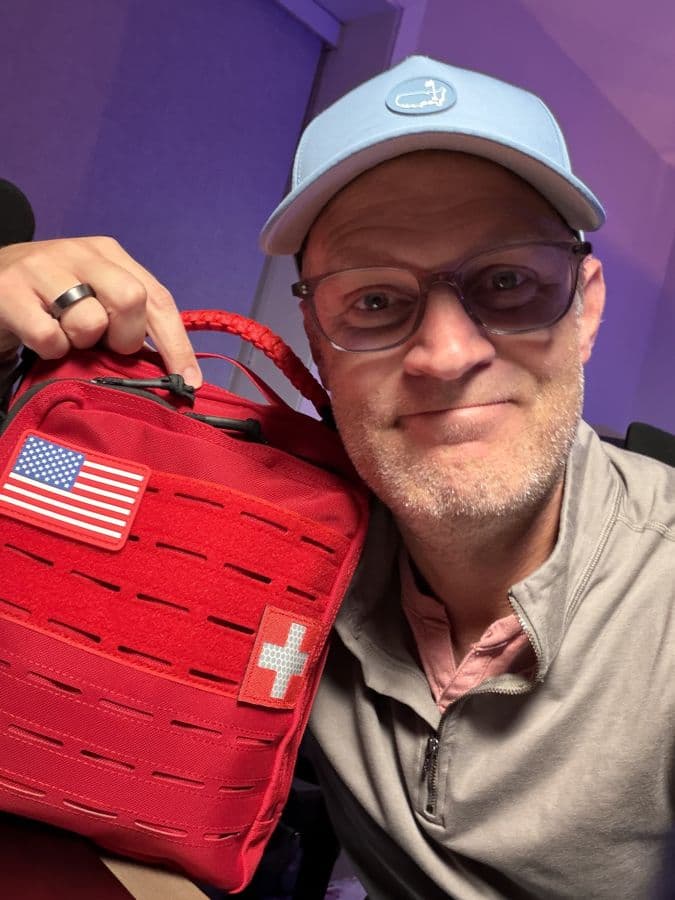
Hey dads, Ryan here. I'm a former paramedic and a dad of three. For about three years, my hiking first aid kit and my skiing first aid kit were the same supplies in a plastic bag. With the seasons changing, I wanted a family first aid kit in a dedicated bag, and I wanted to see what I actually had.
That check turned up two things worth paying attention to: a knockoff tourniquet I identified in my bag, and flashlights that needed fresh batteries.
Watch my family first aid kit build on YouTube.
A personal kit, not a shopping challenge
I wanted this bag to stay narrow enough to carry in my backpack. I liked the top handle and the way it opens so I can see what's inside. Once I packed it, it was thicker than I wanted. That's part of the process. This is a first round, not a perfect kit.
You don't need to copy every item I own. Start by looking at the kit you already have and where you plan to carry it. If you want to build your own first aid kit, take the free kit-plan quiz, then use the build-your-own-kit list. A prepacked kit can be a start. I still open it and see what is actually inside. One prepacked hiking kit in the kit database is the Adventure Medical Kits Hiker.
Disclosure: The kit-list page contains affiliate links. As an Amazon Associate I earn from qualifying purchases.
Give each section a job
In the walkthrough, I separate bleeding supplies from everyday first aid and keep the larger tools in the main compartment. The point is simple: I want to know where things are without emptying the whole bag.
Bleeding control
My supplies include gloves, 4x4 gauze pads, ABD pads, roll gauze, and a genuine C-A-T tourniquet. The page also lists additional options; those are not all items I packed on camera.
A product photo or a familiar-looking label isn't enough to establish a tourniquet's authenticity. Buy a genuine tourniquet from North American Rescue or an authorized dealer. Gear does not replace training; take a Stop the Bleed class. I wrote more in fake vs real C-A-T tourniquet and what goes in a Stop the Bleed kit.
Wounds and cleaning
Bandages in different sizes, gauze, wound wash, and the smaller everyday items get their own space. Keeping them separate means I don't have to dig through those supplies to find the larger gear.
Tools and the rest of the backpack
I also show a SAM splint, triangular bandage, trauma shears, flashlights, and small tools. I look at emergency blankets and other outdoor backup gear too. Some of that can stay in the backpack instead of being forced into the medical bag.
This isn't a how-to for using those supplies. A hands-on first aid class is the place to learn and practice.
Check what is actually in the bag
The flashlights were a good reminder for me. Owning a light isn't the same as checking that it works. Before the next trip, I'm checking batteries and reviewing the supplies, rather than assuming the bag is ready because I packed it a while ago. The same habit is in do first aid kits expire: open the kit and look.
Build your version
What would you add, remove, or organize differently? Mine is a work in progress, and yours can be too. Yours might be a hiking first aid kit, a skiing first aid kit, a car kit, or the bag you grab every day.
Start with the free kit-plan quiz, then use the build-your-own-kit page to review the list. Subscribe through the video's YouTube page for the next kit check.
Common questions
What do I do if I find a knockoff tourniquet?
A product photo or a familiar label isn't enough. I identified a knockoff tourniquet in my own bag. Buy a genuine tourniquet from North American Rescue or an authorized dealer. The rest of what I check is in fake vs real C-A-T tourniquet. Gear does not replace a Stop the Bleed class. Call 911 for emergencies.
What belongs in a family first aid kit for hiking and skiing?
Mine is a backpack bag. Bleeding supplies, everyday wound care, and a few tools each have a spot. Some outdoor backup stays in the backpack instead of the medical bag. I packed gloves, gauze, a genuine C-A-T tourniquet, bandages, wound wash, a SAM splint, a triangular bandage, trauma shears, and flashlights. The build-your-own-kit list has more options than I packed on camera. You don't need to copy every item.
Is it better to build your own first aid kit or buy a prepacked one?
I built mine so I know where things are. A prepacked kit can be a fine start if you open it and see what is actually inside, including the tourniquet. If you want the list I use, it's the build-your-own-kit page. If you want to look at a prepacked hiking kit, the Adventure Medical Kits Hiker is in the kit database. This is a first round, not a perfect kit.
What is Stop the Bleed, and does this bag replace the class?
Stop the Bleed is a short class, and a lot of them are free. This bag does not replace it. Gear does not replace training. Take a Stop the Bleed class. I keep a separate note on what goes in a Stop the Bleed kit. Call 911 for emergencies.
How do I check the flashlight and batteries in a first aid kit?
Owning a light isn't the same as checking that it works. I found flashlights in my bag that needed fresh batteries. Before the next hike or ski day, I check the lights and look through the supplies. I don't assume the bag is ready because I packed it a while ago.
How does this relate to the Dad Kit Check quiz?
The free kit-plan quiz is the Dad Kit Check quiz. You answer a few questions and get a plan built for your family. About 2 minutes. This post and the YouTube video are the family first aid kit I packed for hiking and skiing. The quiz is the plan. The build-your-own-kit page is the list. Neither one is medical advice. Call 911 for emergencies.
Related
- Build your own kit
- Free kit-plan quiz
- Fake vs real C-A-T tourniquet
- What goes in a Stop the Bleed kit
- Do first aid kits expire?
- Kit database
- Watch the kit build on YouTube
Medical disclaimer: This is education and a look at my personal gear, not individualized medical advice. It does not replace a clinician, hands-on training, or emergency care. Call 911 for emergencies. No medication doses are provided.