Guide
First aid kit for kids' sports bags: the sideline checklist
What I pack in my kids' sports bags and a team sideline kit: wound care, cold packs, wraps, blister care, and the info card that matters most. Printable checklist included.
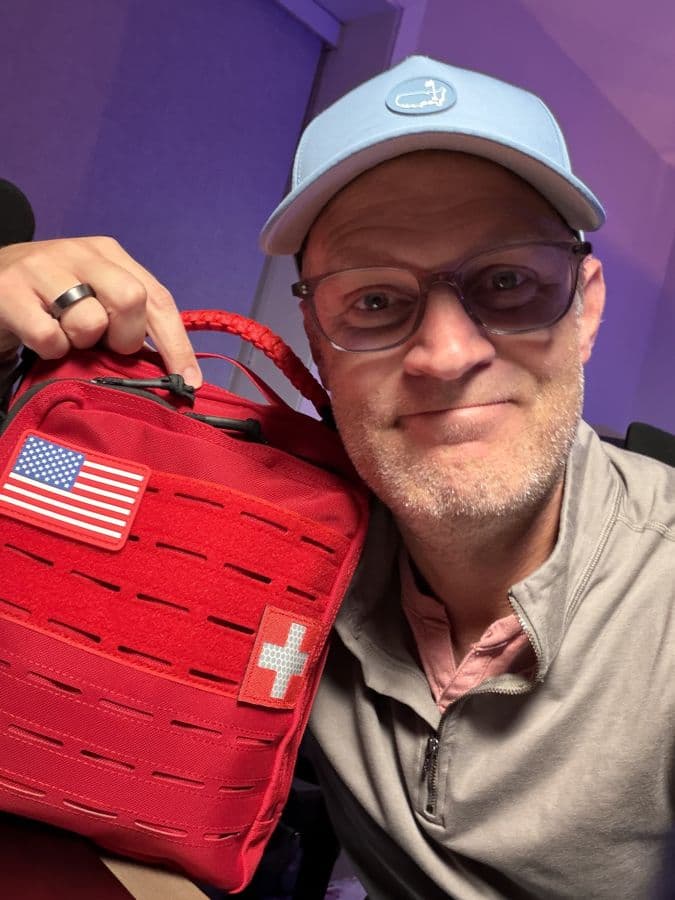
· Ryan Fields-Spack, former fire captain, 20+ years as a paramedic · Education only. Call 911 in an emergency.
Who picks these kits
On this page
- The two-kit system
- The kid's bag kit: the pencil-pouch list
- The sideline kit: the team list
- Wound care
- Bumps, sprains and strains
- Noses, eyes and skin
- Tools and protection
- Information (the most important pocket)
- Head injuries: when in doubt, sit them out
- Knocked-out teeth, heat and other curveballs
- What I leave out, on purpose
- Keep it stocked
- Printable checklist: kids' sports first aid kit
- Common questions
- Ready for game day
Hey dads, Ryan here.
I was a paramedic, and I've stood on plenty of my own kids' sidelines. The gear changes. The injuries mostly don't: scrapes, turf burn, blisters, bloody noses, rolled ankles, and the kid who took a ball to the face and just needs a minute and a cold pack.
Most sports kit lists are written for league safety officers with a budget. This one is for the two kits a dad actually ends up packing:
- Your kid's own bag: a small kit that rides along to every practice.
- The team sideline kit: because somebody always says, "Hey, weren't you a paramedic?" Or you're the volunteer coach.
Grab my free printable checklist and let's pack.
The two-kit system
The kid's bag kit fits in a pencil pouch. It handles the small stuff so a scrape doesn't end practice.
The sideline kit goes in a small backpack or tackle box. It handles a whole team, plus the info you'll need if something bigger happens.
Store-bought kits often don't fit what athletes need, and they can cost more than building your own. A good prebuilt kit still makes a fine base. Add the sport-specific stuff on top. You can see the kits I've graded on the kit database. A small pack kit is the Adventure Medical Kits Ultralight/Watertight .7.
The kid's bag kit: the pencil-pouch list
- Adhesive bandages in a few sizes, including knuckle and fingertip
- A couple of non-stick pads for turf burn
- Antiseptic wipes, for skin around a scrape
- Blister pads or moleskin, because new cleats happen every season
- A small roll of athletic tape or self-adherent wrap
- One instant cold pack, with a thin cloth between the pack and skin, 20 minutes max
- Lip balm and a travel sunscreen
- Hair ties, and a spare mouthguard if their sport uses one
- An info card: your name and number, a backup contact, allergies, conditions, and any medicines they take
If your kid has a prescribed emergency medicine, like an epinephrine auto-injector or a rescue inhaler, it travels with your kid and their care plan, and the coach should know where it is. It doesn't get buried in a general kit. Don't let it freeze or bake in the car.
The sideline kit: the team list
Wound care
- Adhesive bandages, lots of them, in assorted sizes
- Sterile gauze pads, small and large
- Non-stick pads for scrapes
- Roller gauze
- Medical tape
- Antiseptic wipes, for skin around a scrape, not inside a cut
- Saline or clean water for rinsing dirt out of scrapes
- Wound closure strips, for small clean cuts only; deep or gaping cuts go to care
Bumps, sprains and strains
- Several instant cold packs, because away fields don't have ice machines
- Zip bags for ice when you do have it
- Cold always goes on with a thin cloth between it and skin, 20 minutes max
- Elastic wraps, 3 in and 4 in
- Self-adherent wrap
- Athletic tape and pre-wrap
- A triangular bandage for a sling
Noses, eyes and skin
- Gauze for bloody noses
- Sterile eyewash
- Moleskin and blister pads
- Petroleum jelly
- Sunscreen and insect repellent
- Hand sanitizer
Tools and protection
- Several pairs of nitrile gloves
- A CPR barrier mask
- Trauma shears or blunt-tip scissors
- Tweezers
- Nail clippers
- A permanent marker, to note the time a cold pack went on
- A trash bag for used supplies, which also keeps the kit dry in the rain
Information (the most important pocket)
- Team roster with parent contacts and medical notes, kept private and secure
- The field's address written out, so you can give it to 911
- Where the nearest AED is
- The nearest emergency department and urgent care
- A charged phone and a power bank
- The league's emergency action plan, if it has one
Dad tip: before the first game at a new field, find the address and the entrance an ambulance would use. It takes 30 seconds.
Head injuries: when in doubt, sit them out
No kit item fixes a head injury. If a kid takes a hit and seems "off" (confused, dizzy, headache, throwing up, not acting like themselves), they come out of the game and don't go back in that day, and not until a doctor clears them. The CDC's HEADS UP program has free training for coaches and parents, and I'd take it. Call 911 for anything severe or getting worse.
Knocked-out teeth, heat and other curveballs
- Knocked-out tooth: this one is time-sensitive. Pick it up by the top, not the root, and get to a dentist or emergency care fast.
- Heat: water and shade are first aid too. Pack extra water on hot days and watch for kids who get confused, stop acting like themselves or look unwell. Call 911 for serious signs and start cooling them right away.
- Lightning: know your league's rule. When thunder roars, go indoors.
What I leave out, on purpose
- Routine pain relievers. A lot of leagues tell coaches not to hand out medicine, and I don't give dosing advice. Leave medicine decisions to parents and the kid's doctor.
- Anything you haven't been trained to use. If you want to do more, take a first aid and CPR class. Many leagues will cover it.
Keep it stocked
- After every game: replace what you used. Make it part of packing up, like the cones.
- Start and end of season: toss anything expired or opened, recharge the power bank, update the roster.
- Let the tracker remember: my free kit tracker holds the dates for you.
Printable checklist: kids' sports first aid kit
Print it and tape it inside the lid.
Kid's bag kit
- Assorted bandages, including knuckle and fingertip
- Non-stick pads
- Antiseptic wipes
- Blister pads or moleskin
- Small tape or self-adherent wrap
- Instant cold pack and a thin cloth (20 minutes max)
- Sunscreen and lip balm
- Info card
- Prescribed emergency medicine with the care plan, if your kid has one
Sideline kit
- Lots of bandages, gauze, non-stick pads, roller gauze and tape
- Antiseptic wipes and saline or clean water for rinsing
- Four or more instant cold packs, zip bags and a thin cloth (20 minutes max)
- Elastic wraps (3 in and 4 in), self-adherent wrap, athletic tape
- Triangular bandage
- Gauze for noses, eyewash, moleskin
- Sunscreen, insect repellent, sanitizer
- Gloves, CPR mask, shears, tweezers, marker
- Trash bag
- Roster and medical notes, kept secure
- Field address, the nearest AED and the nearest ER
- Charged phone and power bank
Common questions
What should be in a youth sports first aid kit?
Wound care, cold packs, wraps, blister care, gloves, a CPR mask, a few simple tools, and an info pocket with contacts and the field address. The checklists above cover it.
Should a coach's kit include medicine?
Most youth leagues say no routine medicine. Prescribed emergency medicines travel with the athlete. Check your league's policy.
What's the best first aid kit for kids' sports?
The one that's stocked and actually in the bag. For a head start, see the Adventure Medical Kits Ultralight/Watertight .7, the kit database, and how I grade. A full hands-on review is still coming for most of them.
Ready for game day
Print the free checklist, set up the free tracker, and pack the bag tonight. Next practice, you're the calm one on the sideline.
Check your kit. Win the day.
General info only, not medical advice. In an emergency, call 911. It doesn't replace your kid's doctor or a hands-on first aid and CPR class.
Email the family checklist
The printable list for the car, the house, and the bag by the door. Free. Unsub anytime.