Guide
Baby first aid kit list: what a new dad actually needs
A short baby first aid kit list from a former paramedic and dad of three: what I'd keep, what I'd skip, where it lives, and a printable checklist for home and the diaper bag.
· Ryan Fields-Spack, former fire captain, 20+ years as a paramedic · Education only. Call 911 in an emergency.
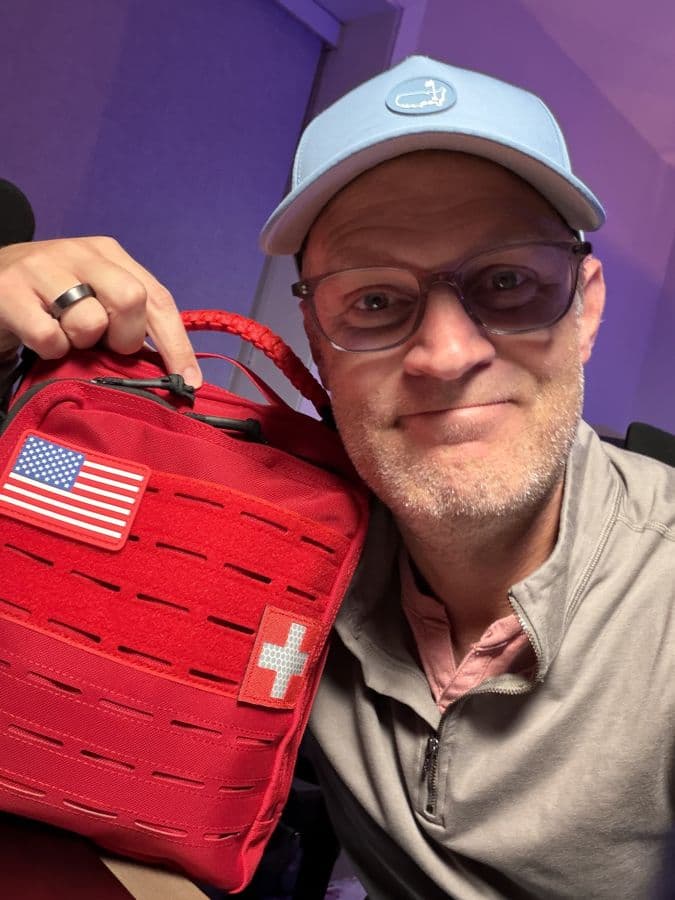
Who picks these kits
On this page
- First, know when to call
- What I'd keep in the baby kit
- Checking on baby
- Stuffy noses (I used these the most)
- Small cuts and bumps (more for the crawling and toddler stage)
- Tools
- Medicine: ask your pediatrician first
- Information
- What I'd skip, or wait on
- Where I keep it
- Keep it fresh
- Printable checklist: baby first aid kit
- Common questions
- You've got this, dad
Hey dads, Ryan here.
I've got three kids, and my baby kit got a lot shorter with each one. You don't need a 25-piece grooming set with a tiny hairbrush. You need a short list of things you'll actually use, kept in one place you can find at 2 a.m.
This is the list I'd hand a new dad. Grab my free printable checklist too.
First, know when to call
Before any gear, ask your pediatrician at the first visit: "What should make me call you, and what should make me call 911?" Write the answer down and put it in the kit. Most of what's in a baby kit handles small stuff. On the big stuff, your job is to call fast and stay calm.
Take an infant CPR and choking class before the baby comes or soon after. A kit doesn't replace the class.
What I'd keep in the baby kit
Checking on baby
- Digital thermometer. Ask your pediatrician which type and method they want you to use at your baby's age, and how they want readings reported. A fever of 100.4°F (38°C) or higher in a baby under 3 months means call your pediatrician right away, day or night.
- A notepad or a notes app to log temps, feeds and symptoms. When you call the nurse line, they'll ask.
Stuffy noses (I used these the most)
- Nasal aspirator, bulb or another style. The hospital often sends you home with a bulb.
- Saline drops or spray made for infants.
Small cuts and bumps (more for the crawling and toddler stage)
- Kid-size adhesive bandages
- Sterile gauze pads
- Paper or silicone medical tape, which is gentler on baby skin
- Gentle soap and water supplies for cleaning a scrape
- Petroleum jelly
- An instant or small reusable cold pack, with a thin cloth between the pack and skin, 20 minutes max
Tools
- Pointed tweezers, for splinters later on
- Blunt-tip scissors
- Baby nail clippers or a file
- A small flashlight, for ears, mouths and the back seat at night
- Disposable gloves
Medicine: ask your pediatrician first
A lot of baby kit lists include a fever reducer, gas drops and diaper cream. I don't give medicine advice or doses here. Ask your pediatrician or pharmacist which medicines, if any, to keep on hand for your baby's age and weight, how to give them, and when to call instead. Keep the measuring device that comes with each medicine with that medicine.
Information
- Pediatrician's number and the after-hours line
- Poison Control: 1-800-222-1222 (US)
- Your home address written out, because sitters and grandparents forget it under stress
- Baby's date of birth, allergies and any conditions
What I'd skip, or wait on
- The novelty sets. Brushes, combs and toothbrushes are fine to have, but they aren't first aid.
- A giant adult kit in the nursery. Most of it won't fit a baby. Keep the main family kit in the house and a small baby kit next to it.
- Gadgets that promise to replace a call to your doctor. Some are handy. None of them replace a phone call to the nurse line.
Where I keep it
- One home kit in a clear, labeled bin, up high and out of little kids' reach, where you change the baby or near the kitchen. Every grown-up in the house, and the sitter, should know where it is.
- A mini kit in the diaper bag: a few bandages, wipes, saline, the aspirator, a copy of the info card, and any medicine your pediatrician recommended.
- The car: add a baby section to your car emergency kit: diapers, wipes, a change of clothes and a blanket.
Dad tip: tape the info card inside the bin lid. When you're stressed, you won't have to remember a single phone number.
Keep it fresh
Babies outgrow everything, including their first aid kit.
- Every 3 months: check dates on saline, wipes and anything your doctor had you add.
- At each stage (rolling, crawling, walking): add more bandages, a second cold pack and tools for splinters.
- After every use: restock right away. The kit you used last Tuesday is the one you'll grab next Tuesday.
My free expiry tracker can hold the dates so you don't have to.
Printable checklist: baby first aid kit
Print it, stick it on the bin and check things off.
Baby first aid kit
- Digital thermometer, the type your pediatrician recommends
- Notepad or log for temps and symptoms
- Nasal aspirator
- Infant saline drops or spray
- Kid-size adhesive bandages
- Sterile gauze pads
- Gentle medical tape
- Cold pack and a thin cloth to wrap it (20 minutes max)
- Tweezers
- Blunt-tip scissors
- Baby nail clippers or a file
- Small flashlight
- Disposable gloves
- Only the medicines your pediatrician recommends, each with its own measuring device
- Pediatrician and after-hours numbers
- Poison Control: 1-800-222-1222
- Home address written out
- Baby's date of birth, allergies and conditions
- Your pediatrician's 'when to call' notes
Diaper bag mini kit
- A few bandages and wipes
- Saline and the aspirator
- A copy of the info card
Common questions
Do I need a prebuilt baby first aid kit?
No. A prebuilt kit can be a fine starting point, and it makes a good baby shower gift, but you'll almost always add a few things and pull out filler. I grade family kits on what's actually useful. See how I grade, the kit database, and the Welly First Aid Kit, 130 count. A full hands-on review is still coming for most of them.
What's the difference between a baby first aid kit and a baby health kit?
Health or grooming kits focus on nail care, brushes and medicine droppers. A first aid kit adds wound care, gloves, a cold pack and your emergency info. You want both covered, but you don't need two bins.
What goes in a baby kit for travel?
Your diaper bag mini kit, plus the thermometer, any medicine your pediatrician recommended, and the pediatrician's number in your phone. Look up the nearest urgent care and children's hospital where you're staying.
When should I replace things?
Check dates every few months, restock after each use, and update the kit as your baby grows.
You've got this, dad
Being a ready dad is mostly a bin, a list and a calendar reminder. Print the free checklist, set up the free tracker, and look at the Welly First Aid Kit, 130 count when you want a small ready-made tin.
Check your kit. Win the day.
General info only, not medical advice. In an emergency, call 911. It doesn't replace your pediatrician or a hands-on infant CPR and first aid class.
Email the family checklist
The printable list for the car, the house, and the bag by the door. Free. Unsub anytime.